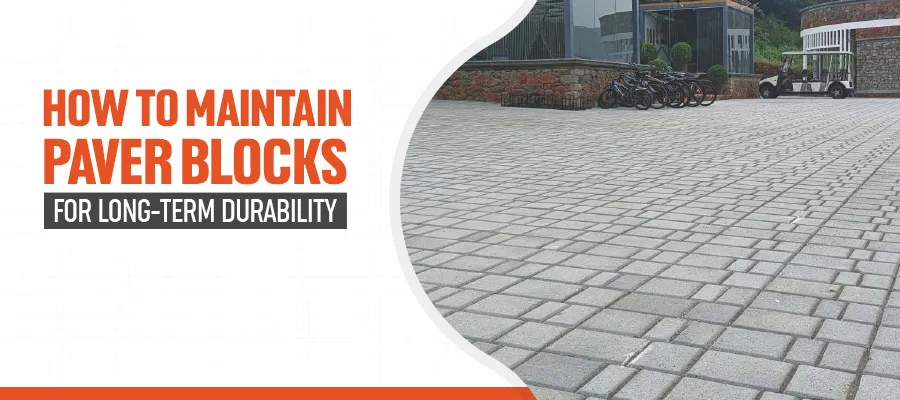
How to Maintain Paver Blocks for Long-Term Durability
May 25, 2026Most people think about paver blocks once, during installation, and never again. The blocks go down, the project wraps up, and the surface gets used without another thought. That works fine for a while. Then weeds appear in the joints. A section starts rocking underfoot. Stains set in and won't shift. What started as a low-maintenance surface suddenly needs serious attention.
Paver blocks genuinely are durable. These surfaces endure weight loads from vehicles, weather cycles, and numerous footsteps over the years without experiencing the cracks that concrete suffers from. However, durability does not make them infallible. Surfaces that receive routine maintenance will survive longer than those that receive none at all.
Cleaning: Easier Than You Think
Water is more than enough for a basic routine cleaning. A garden hose works for light dirt. Tougher grime responds well to a pressure washer, though the technique matters. High pressure concentrated on joints washes out sand quickly. Move the nozzle around, try not to apply directly to any joints, and work under some pressure without using full pressure.
An oil leak from an automobile requires prompt action. Oil that is new can be treated with absorbent material like sand or cat litter placed on top of the stain. What will remain after absorbing the majority of the stain will be cleaned up using a scrub brush and detergent.
Joint Sand Does More Work Than It Gets Credit For
This is the maintenance detail that gets overlooked most consistently, and it's also the one with the most consequences when neglected. Joint sand locks pavers in position, distributes load between adjacent units, and stops individual blocks from rocking under pressure. As it depletes through weathering, washing, and normal use, the surface gradually loses its structural integrity. Pavers that were perfectly stable start shifting.
Check joint levels annually and top up where sand has dropped. Polymeric sand is worth the additional cost for refilling. The binding agents in it harden on contact with water, making it considerably more resistant to washout than ordinary kiln-dried sand. In areas with heavy rainfall or high traffic, it also significantly reduces weed germination in the joints.
Whether to Seal
A good sealant reduces water absorption, slows oil penetration, and helps maintain colour. It also binds joint sand and makes the surface less hospitable to weed growth. For decorative driveways, entrance courtyards, and areas that take regular oil or staining risk, sealing makes clear practical sense.
Heavy industrial surfaces are less suitable. Sealant wears unevenly under constant vehicle load, and the reapplication cycle becomes impractical. For these surfaces, good cleaning habits and regular joint maintenance achieve more than sealing would.
In cases when sealing is appropriate, the secret is good preparation. The surface must be cleaned and then allowed time to dry before any application. Any moisture left in it will become trapped and discolour the material if sealing is applied over it. Count on resealing the area every three to five years.
Preventing Repairs from Occurring
Unlike poured concrete surfaces, where repairs would mean demolishing large areas, the use of paving blocks allows one to lift and replace individual paving stones without disturbing the surrounding units in any way, provided the repair is done at an early stage.
Any paver that rocks indicates that its subbase needs fixing. Lifting the unit, correcting the base, and re-bedding it is straightforward. Leaving it means the surrounding units start taking uneven loads and eventually develop the same problem.
Cracked pavers are best replaced as soon as they appear. A single crack rarely stays isolated because adjacent units absorb redistributed loads they weren't designed to handle. It is possible to have a few spare pavers that match those used in the initial installation for fast and invisible repairs.
Paver blocks installed over a good foundation and kept in good condition with clean joints and regular maintenance will continue to function properly long after the first twenty years of their life span. The effort required is modest. The alternative, full replacement of a neglected surface, is not.
Get the best quote from us