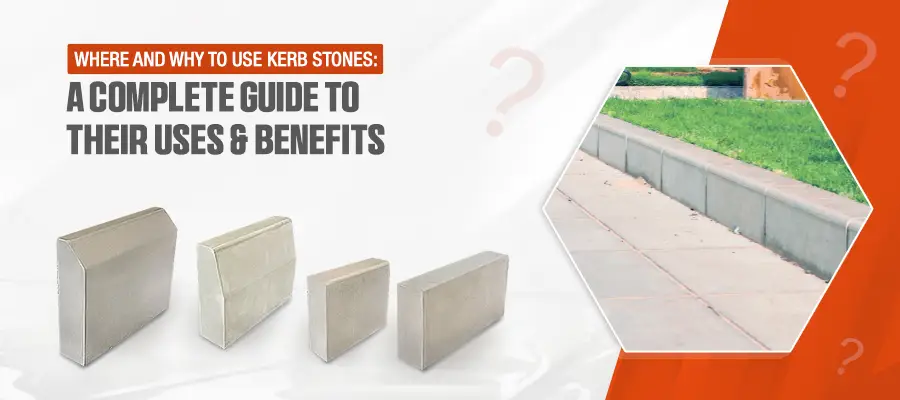
Where and Why to Use Kerb Stones: A Complete Guide to Their Uses & Benefits
Mar 05, 2026Kerb stones are easy to overlook. They sit at the edge of every street, separating tarmac from pavement, doing unglamorous work that nobody thinks about. But pull them out and watch what happens.
Within weeks, road edges start crumbling. Water collects in odd places. Vehicles creep onto footpaths. That plain concrete border suddenly looks a lot more important when repairs start running into thousands of pounds.
What Kerb Stones Actually Do
Kerbs handle multiple jobs simultaneously. Remove one and you'll see exactly what it was preventing.
Holding Roads Together
Roads fail from the edges first. The centre holds up fine whilst the sides fall apart. Without kerbs, vehicle wheels push the tarmac outward bit by bit. Rain washes soil out from underneath. Cracks form, then whole sections sink.
Kerb stones stop this by holding the pavement structure in place. They prevent base materials from migrating sideways. When traffic applies lateral pressure, the kerb redirects it downward into the ground instead of letting it push outward. One concrete edge preventing structural collapse.
Controlling Water Flow
Rain doesn't ask permission before flowing somewhere inconvenient. Usually straight into foundations or under road surfaces. Both scenarios end badly.
Kerbs establish a pathway through which water flows to the drainage points. The raised edge assists in directing water to the required area through the road slope. Water otherwise soaks into the road, resulting in erosion of the base layer, thereby creating potholes that develop into sinkholes.
Heavy rainfall regions can't function without proper kerbing. It's the difference between roads that last and roads that need constant patching.
Creating Safety Boundaries
Drivers use kerbs as navigation aids, particularly in darkness or rain. That visible edge shows where the road stops. Car parks rely on kerbs to protect landscaping and prevent vehicles from mounting walkways.
Pedestrians get a physical barrier between themselves and traffic. Loading bays use kerbs to stop vehicles rolling too far forward. Simple safety infrastructure that works because it's always there.
Where Kerbs Are Essential
Some locations cope without kerbs. Most deteriorate quickly.
Urban Roads and Residential Areas
City planners install kerbs along virtually every paved road for practical reasons. They extend pavement life considerably. Residential developments need them for boundary definition, stormwater management, and proper transitions between driveways and streets.
Monsoon regions depend on them. Sheet flow erosion destroys road shoulders and undercuts edges within a season. Kerbing converts recurring repair costs into a one-time installation expense.
Commercial and Industrial Sites
Car parks endure constant traffic, oil spills, and water runoff. Perimeter kerbs contain this whilst protecting light poles, planted areas, and building foundations from vehicle impacts.
Loading docks require particularly robust kerbing. Reversing lorries make repeated contact. Standard kerbs crack quickly under this treatment. Industrial-grade precast kerbs absorb impacts that would destroy ordinary kerbing in weeks.
Public Infrastructure
Railway platforms demand precise edge definition. Platform coping stones mark safe standing areas versus track zones. Dimensional tolerances are strict because failure risks lives.
Bus rapid transit systems use kerbs for physical lane enforcement. Paint doesn't stop cars drifting into bus corridors. Kerbs do. The height and profile guide buses whilst blocking other vehicles.
Landscaping and Property Development
Garden beds need edge protection or mulch spreads onto pavements. Kerbs contain irrigation water and establish maintenance boundaries. They also shield plant stems from mowers and strimmers.
Driveways benefit from kerbs separating vehicle areas from lawns. Without them, cars gradually compact adjacent soil, unofficially widening the paved area. The lawn edge becomes a rutted, muddy strip.
Why Manufacturing Method Matters
Production method determines durability under real-world conditions.
Wetpress technology creates denser kerbs than dry-cast methods. High-pressure hydraulic processes compact concrete thoroughly, reducing porosity. Lower porosity delivers better freeze-thaw resistance and reduced water absorption.
Coastal areas and locations using de-icing salt benefit from this durability. Wetpress kerbs resist chemical degradation longer because the tight matrix blocks salt infiltration that causes surface breakdown. Higher initial cost but significantly longer service life in harsh environments.
The Long-Term Perspective
Properly installed kerbs last decades with minimal maintenance. Poor installation produces shifted, settled, or cracked kerbs within twelve months. Foundation preparation and alignment matter as much as kerb quality.
Quality kerbing reduces long-term costs through lower replacement frequency and decreased road maintenance expenses. Stable edges keep entire pavement structures stable. Maintenance crews can focus on road surfaces instead of constantly rebuilding failed edges.
Property values reflect kerbing quality. Buyers notice these details, even subconsciously. Clean kerb lines indicate professional construction and suggest the underlying infrastructure received equal attention. These details separate quality developments from budget projects.
Kerb stones perform essential work without fanfare. They protect road edges, manage water flow, and maintain infrastructure functionality. Understanding their role helps prevent the costly problems that emerge when they're absent or inadequate.
Get the best quote from us